
Rib pain
Rib Pain When Breathing In: What It Could Mean
 By Dr. Alex Greyvenstein, DC5 min read
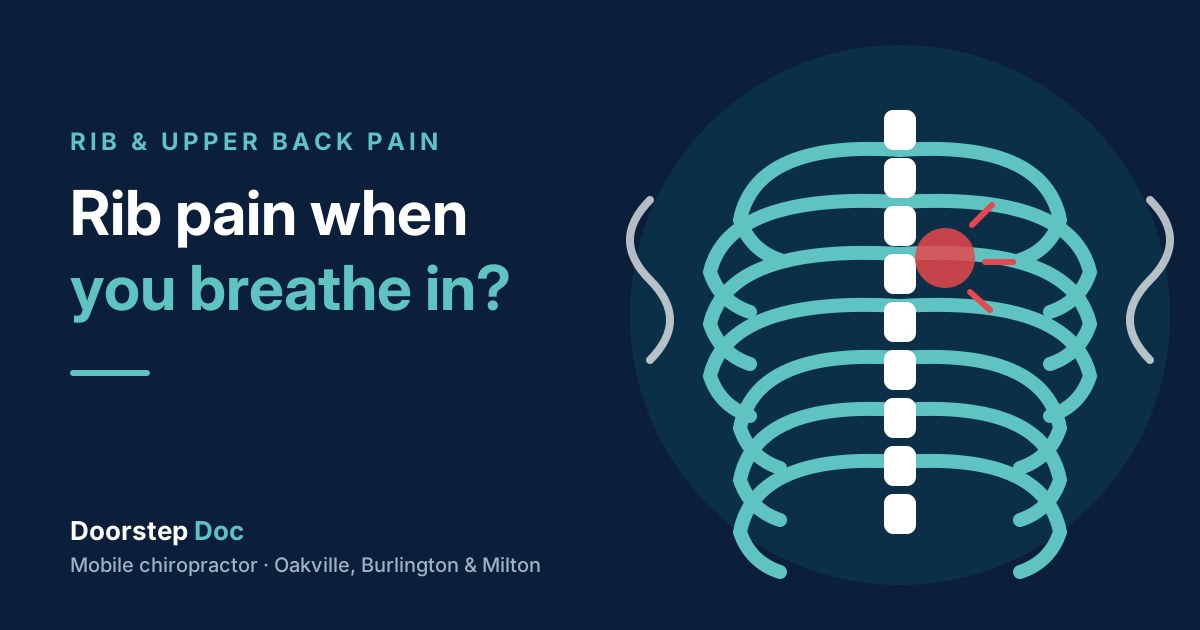
Rib pain when breathing in has a way of getting your full attention. You go to take a nice deep breath, maybe after a coughing fit or hauling the patio chairs into the garage before another Oakville winter, and a sharp catch stops you halfway. Then you spend the rest of the day taking careful little sips of air and wondering what's going on in there.
A lot of people ask me whether it's a muscle, a "rib out of place" or something more serious. Most of the time it turns out to be a muscle or joint problem. Sometimes it isn't, and that part comes first.
First, the kinds of rib pain that aren't for a chiropractor
Pain around the ribs and chest can come from the heart, the lungs or a blood clot, and those need a medical doctor, not me. I'd much rather you get checked and it turns out to be a sore muscle than the other way around.
Call 911 for chest pain, pressure, squeezing or discomfort, especially with sweating, nausea, shortness of breath or light-headedness, or pain spreading to the arm, neck, jaw or back; sudden shortness of breath or sudden sharp chest pain, especially after surgery, a long trip or time in bed, or with a swollen, painful calf; coughing up blood; or chest pain after a car accident, a bad fall or a hard hit.
See your doctor promptly if rib pain comes with a fever, chills or a cough that's bringing up coloured phlegm; if you've had a fall or a hard coughing fit and there's a very tender spot on the rib (especially if you have osteoporosis); if you notice a band of burning pain or tingling on one side, with or without a rash; or if the pain is constant and not affected by movement, wakes you at night, or comes with unexplained weight loss or a history of cancer.
That burning band is worth a word. Shingles can cause pain along one side of the ribs for a few days before any rash shows up. If that sounds like you, call your doctor soon, since antiviral treatment works best when it's started early.
Common musculoskeletal causes of rib pain when breathing
Your ribs move every time you breathe, cough, sneeze or laugh. So when anything in or around them is irritated, breathing is often the first thing to complain. Once the serious causes are ruled out, it's usually one of these.
An irritated rib joint at the back
Most ribs attach to your spine through two small joints. When one of them gets stiff or irritated, the pain is usually sharp and sits beside the spine or just under the shoulder blade. It often catches on a deep breath, a twist or a reach into the back seat. People call this a "rib out." The rib hasn't popped out like a dislocation; the joint just isn't moving well and the muscles around it have tightened up to protect it.
A strained muscle between the ribs
The intercostal muscles sit between your ribs and help you breathe. A violent sneeze, a long cold with lots of coughing, a golf swing or lifting something heavy and awkward can strain them. It tends to hurt with breathing, twisting and pressing on the spot.
Costochondritis at the front
Costochondritis is inflammation where the ribs join the breastbone. It causes sharp or aching pain at the front of the chest that's often worse with deep breaths, coughing or pressing on the area. Because it's at the front, it's very easy to mistake for heart pain, and that's exactly why chest pain at the front should be checked by a doctor first.
A bruised or cracked rib
A fall on the ice, a tumble off the ladder while cleaning the eavestroughs, or even a hard, prolonged cough can bruise or crack a rib, more easily if your bones are thinner. These need medical assessment, not adjustments.
Why the mid back keeps coming up
In my experience, a stiff mid back is often part of the story. If you spend the day hunched over a laptop in the Uptown Core or shoulder-checking your way along the QEW, the joints between your shoulder blades can stiffen up. Then one sneeze or one twist puts more load on a rib joint than it was ready for. It's rarely the sneeze's fault alone.
What I do at a home visit in Oakville
Because chest pain can have so many causes, I start with questions: how it began, what makes it better or worse, and anything that points toward a medical problem. If something doesn't fit a muscle or joint problem, I'll tell you and send you to your doctor.
If it does, I'll check how your upper back and ribs move, find the tender joint and see which movements set it off. Treatment may include:
- Gentle mobilization of the rib and upper back joints, often timed with your breathing
- A chiropractic adjustment, when it's a good fit for you
- Soft tissue work on the muscles that have locked up to guard the area
- A few simple breathing and rotation exercises to keep it moving between visits
You can read more on my rib pain treatment page, and the rib and upper back exercises Helena and I put together are a good place to start at home. If you'd rather not have adjustments, Helena Greyvenstein, our physiotherapist, treats rib and upper back pain in Oakville with hands-on mobilization, breathing work and exercise.
What you can do in the meantime
Once the serious causes are ruled out, these small things often help a sore rib settle:
- Keep breathing. Shallow breaths feel safer, but they let the area stiffen. A few slow deep breaths every hour, only as far as is comfortable, keep things moving.
- Hug a pillow when you cough or sneeze. Pressing a pillow or your hand over the sore side softens the jolt. Cold and flu season in Oakville means you'll probably get some practice.
- Keep moving gently. An easy walk along the Bronte waterfront or around the block is usually better than sitting still all day.
- Change your sleeping setup. Lying on your back, or on the comfortable side with a pillow tucked against your chest, can make nights easier.
- Take a break from the heavy jobs. The leaves and the patio furniture will still be there next week. That's both the good news and the bad news.
If it isn't getting better after a week or two, or it's getting worse, get it checked rather than waiting it out.
Not sure what your rib pain is?
That's a fair question to bring to the free 15-minute phone call. If it sounds like something for your doctor, I'll say so. If it sounds like a rib or upper back problem I can help with, I'll come to you in Oakville, Burlington or Milton. Book a home visit, or start with the phone call.
Common questions
Why does my rib hurt when I take a deep breath?
Your ribs move every time you breathe, so an irritated rib joint, a strained muscle between the ribs or inflammation where the ribs meet the breastbone can all hurt on a deep breath. Pain with breathing can also come from the lungs, the heart or a blood clot, so chest pain with shortness of breath, sweating, nausea or pain spreading to the arm or jaw needs 911, and other new chest pain should be checked by a doctor first.
How do I know if rib pain is muscular?
Pain from a muscle or rib joint is often sharp, sits in one spot you can point to, and changes when you move, twist, reach or press on it. That pattern is a clue, not a diagnosis. If the pain is constant, comes with fever, a cough with coloured phlegm, shortness of breath, or a rash, or doesn't change with movement, see a doctor.
Can coughing cause rib pain?
Yes. A long bout of coughing can strain the muscles between the ribs or irritate the rib joints, and a hard, prolonged cough can even crack a rib, more easily if your bones are thinner. Coughing with a fever or coloured phlegm needs a doctor, and coughing up blood needs emergency care.
Can a chiropractor help with rib pain?
When rib pain comes from a stiff or irritated rib joint or tight muscles in the upper back, chiropractic care such as gentle mobilization, an adjustment when it fits, soft tissue work and exercises may help. A chiropractor should screen for heart, lung and other medical causes first and refer you to a doctor when the pain doesn't fit a muscle or joint problem.
How long does rib pain take to go away?
It depends on the cause. A strained muscle or irritated rib joint often settles over days to a few weeks, while a cracked rib or costochondritis can take longer. If the pain is getting worse or isn't improving after a week or two, get it checked.