
Where it happens
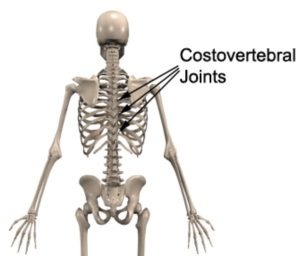
Most often in the upper and middle back, beside the spine or just under the shoulder blade, where the ribs meet the vertebrae.
Upper back · Physio & chiro at home
 Reviewed by Dr. Alex Greyvenstein, DC · October 1, 2026
It often starts with something small. A big sneeze, reaching into the back seat, or a bad night's sleep, and suddenly there's a sharp, stabbing pain beside your spine or under your shoulder blade that catches every time you breathe in.
People often describe it as a rib that's "out of place." Dr. Alex assesses the rib joints and upper back in your home, eases the irritated area, and helps you breathe and move comfortably again.
Choose chiropractic care with Dr. Alex Greyvenstein, DC, or physiotherapy with Helena Greyvenstein, Physiotherapist, or both.
The basics
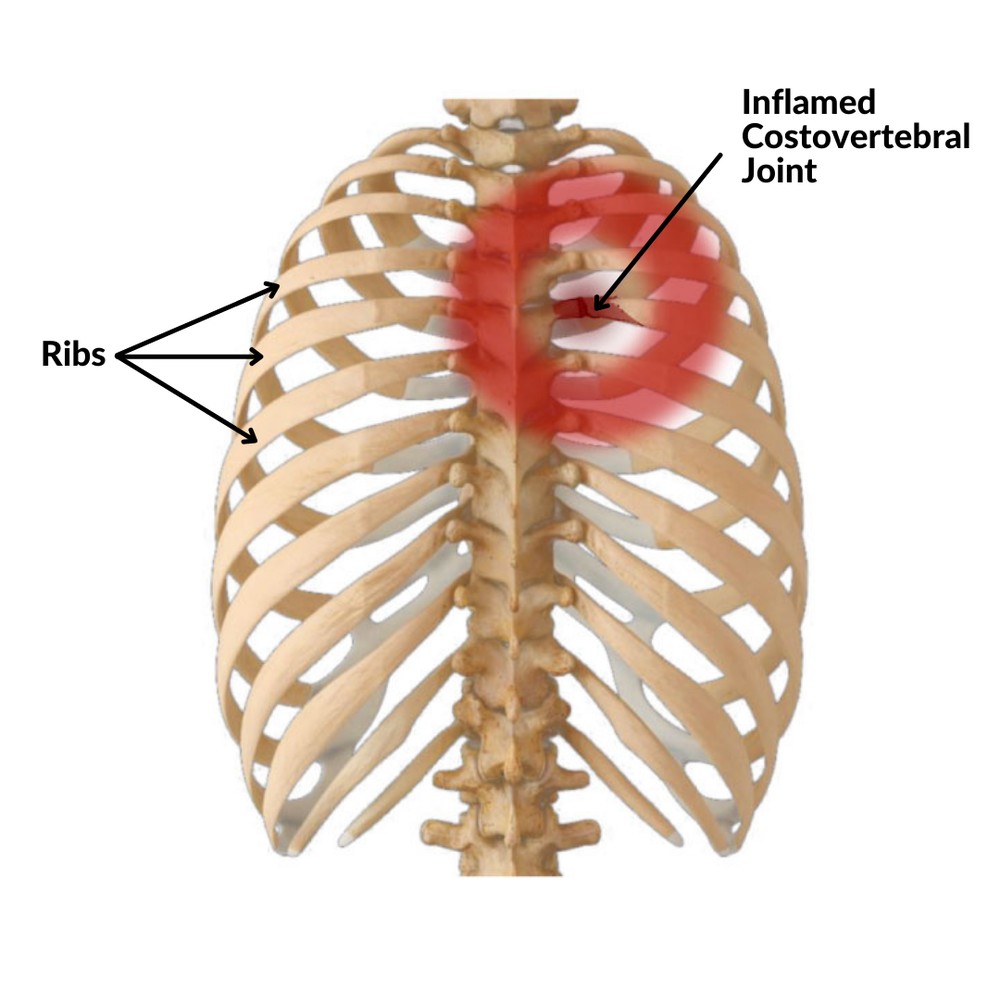
Each of your ribs connects to your spine at the back through two small joints. Every time you breathe, twist or reach, those joints move a little. When one of them gets stiff, irritated or stuck, the muscles around it tighten up to protect it, and the result can be surprisingly sharp pain.
That's what people usually mean by a rib subluxation or a "rib out." The rib hasn't popped out of place like a dislocation. The joint just isn't moving the way it should, and it's letting you know.
Most often in the upper and middle back, beside the spine or just under the shoulder blade, where the ribs meet the vertebrae.
Your ribs move with every breath. When a rib joint is irritated, a deep breath, cough or sneeze moves it and sets off the pain.
Rib pain can wrap around toward the chest, which understandably worries people. That's why your assessment always rules out other causes first.
Causes
Rib joint irritation often comes on suddenly with an everyday movement. Common causes include:
Usually the upper back was already a bit stiff, and one movement was the final straw.
Symptoms
You might notice:
The pain is usually very localized. Many people can point to it with one finger.
Treatment
Your visit starts with questions about how the pain began and a check for anything that needs a doctor first. Then Dr. Alex assesses how your upper back and ribs move, where the tender joint is, and which movements set it off. Treatment may include some of the following.
When a rib joint or the upper back is stiff, a chiropractic adjustment can help restore normal movement. Many people notice they can take a deeper breath more comfortably right after. Adjustments are only used when they're a good fit for you.
Gentle, repeated movements to the rib and upper back joints ease stiffness without a quick thrust. It's a good option when the area is very sore, or if you prefer a gentler approach. Often it's timed with your breathing.
The muscles around an irritated rib tend to lock up to guard it. Dr. Alex may use Muscle Release Therapy (MRT) to ease that tension in areas such as the:
Gentle movement helps the area settle and keeps it from stiffening up again. Your program may include:
Physiotherapy
 Helena Greyvenstein · Physiotherapist
Prefer physiotherapy, or want both? Physiotherapy treats rib and upper back pain without adjustments, using hands-on treatment, exercise and education. After an assessment, treatment may include:
You'll finish with a short home program you can actually keep up with. Learn more about in-home physiotherapy in Oakville.
Day to day
A few small things can help the area settle faster:
It's natural to take shallow breaths when it hurts, but that makes the area stiffer. A few slow, comfortable deep breaths every hour help.
Hug a pillow or press a hand over the sore side when you cough or sneeze to soften the jolt.
Easy walks and gentle upper back movement help more than staying still all day.
Lying on your back or the comfortable side with a pillow tucked against you can make sleeping easier.
Why mobile
When every breath and twist hurts, driving and twisting to check your blind spot is the last thing you want to do. With mobile chiropractic care, Dr. Alex comes to you.
For seniors living at home, getting to a clinic can mean painful car transfers, a ride from family, and a long wait. Treatment at home removes all of that.
Booking for a parent? You can fill out the form on their behalf.
Back spasm, sciatica or a locked-up neck can make the drive to a clinic the most painful part of getting help. So can recovering from a car accident.
Car accident rehab may be covered through your extended health benefits and your auto insurance accident benefits. Ask and I'll help you sort out what applies.
No commute, no parking, no waiting room. Your visit happens at home, so the time you'd spend travelling stays yours.
Appointments are 30 minutes, including setup, with about 20 to 25 minutes of hands-on assessment and treatment.
Service area
Dr. Alex brings rib pain assessment and treatment directly to your home.
A convenient alternative to travelling to a traditional clinic, with home visits throughout Burlington.
Book in BurlingtonSafety first
Rib joint pain is common and usually not serious. But pain in the chest and ribs can also come from the heart, lungs or other organs, so these signs need medical attention first.
Call 911 if you have:
See your doctor promptly if you have:
Your assessment includes questions to screen for these. If anything points elsewhere, Dr. Alex will tell you and refer you to the right place.
More care at home
Rib pain care is part of our in-home chiropractic care in Oakville. Doorstep Doc also offers in-home physiotherapy with Helena if you need more help with movement and strength.
Common questions
Both treat rib and upper back pain. Chiropractic care with Dr. Alex can include adjustments, while physiotherapy with Helena focuses on hands-on treatment and exercise without adjustments. Some people do well with one, some with both, and because we're a family-run practice, your care stays coordinated. If you're not sure where to start, ask on the 15-minute phone call.
Not usually in the way people imagine. Outside of a serious injury, ribs don't pop out like a dislocated shoulder. What people feel is a rib joint at the spine that has become stiff and irritated, with the muscles around it locked up to protect it. The pain is very real, it's just not a rib sitting in the wrong spot.
Yes, rib joint pain is one of the more common things chiropractors treat. Adjustments or gentle mobilization to the rib and upper back joints, plus soft tissue work on the surrounding muscles, often help you breathe and move more comfortably.
Your ribs move with every breath. When one of the rib joints is irritated, breathing in deeply moves that joint and stretches the tight muscles around it, which sets off the pain. Coughing, sneezing and laughing do the same thing, only harder.
Rib joint pain is usually sharp, easy to point to with one finger, tender to touch, and changes with breathing, twisting or certain positions. Heart-related pain is more often a pressure or squeezing in the chest and may come with shortness of breath, sweating, nausea, or pain into the arm or jaw. If you're ever unsure, call 911 first. It's always better to be checked.
A rib joint that flared up recently often settles within a few days to a couple of weeks, especially with treatment. If it keeps coming back, it's usually a sign the upper back is stiff overall, and working on that helps prevent it.
Either can help, so use whichever feels better. Many people find heat on the upper back relaxes the guarding muscles. Keep sessions to about 15 to 20 minutes and protect your skin.
Most people are more comfortable on their back or on the side that doesn't hurt, with a pillow hugged in front or tucked behind them for support. Avoid lying flat on the painful spot until it settles.
Yes. Dr. Alex provides mobile chiropractic visits for rib and upper back pain throughout Oakville, Burlington and Milton.
Reviews shown directly from Google Maps.
Get started
If a sharp pain in your upper back or ribs is catching every time you breathe, Dr. Alex will assess it at home and help you breathe and move comfortably again.