Safety first
Before you start
Keep pain at about 3 out of 10 or less, and make sure it settles by the next morning.
Move slowly and stay in a comfortable range. Mild stretching, tiredness or soreness that settles within a day is normal. Sharp pain, or symptoms that spread or get worse, mean stop.
Stop and get checked if you have:
- Elbow pain with chest pain, shortness of breath, sweating or pain into the jaw (call 911)
- Elbow pain after a fall or injury, especially with swelling, bruising or an elbow that looks out of place
- A hot, red, swollen elbow, or fever
- Numbness, tingling or weakness in the hand or fingers
- An elbow that locks, catches or won't fully straighten
- Constant pain at night, unexplained weight loss or a history of cancer
The routine
Tennis elbow exercises, step by step
Isometric wrist extension
- Sit with your forearm resting on a table, palm down, hand over the edge.
- Place your other hand on the back of your sore hand.
- Push your hand up into it without letting it move.
Hold 30 to 45 seconds, 3 to 5 times
Tip: Use moderate effort. Pain should stay mild (about 3 out of 10 or less) and settle afterward.
Wrist extension with a light weight
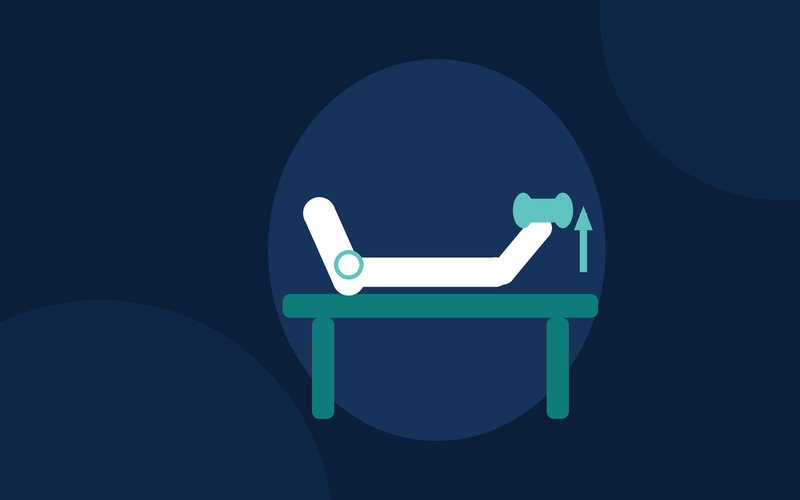
- Rest your forearm on a table, palm down, holding a light weight or water bottle.
- Lift the back of your hand up toward the ceiling.
- Lower slowly over about 3 seconds.
3 sets of 10 to 15
Tip: The slow lowering is the important part. Use your other hand to help on the way up if needed.
Grip squeezes
- Hold a rolled towel or soft ball.
- Squeeze to a comfortable effort, hold, then relax.
Hold 5 seconds, 10 times
Tip: Stop short of sharp pain at the outer elbow.
Forearm rotation
- Rest your forearm on a table with your elbow bent, holding a light hammer or water bottle upright.
- Slowly turn your palm down, then palm up.
2 sets of 10 each way
Tip: To make it easier, slide your hand up the handle toward the head of the hammer.
Wrist extensor stretch
- Hold your sore arm out in front, elbow straight, palm down.
- Gently bend your wrist down with your other hand until you feel a stretch on the top of the forearm.
Hold 20 to 30 seconds, 2 to 3 times
Avoid: Don't stretch into sharp elbow pain.
Shoulder blade rows
- Anchor a light band in front of you at chest height.
- Pull your elbows back, squeezing your shoulder blades together.
- Return slowly.
2 sets of 10 to 15
Tip: Some people find stronger shoulder blade muscles make arm tasks feel easier.
Progress
How often to do them and how to progress
Start with the easier exercises and fewer repetitions, then build up gradually over the coming weeks as they feel easier. When 3 sets of 15 feel easy and the elbow is fine the next morning, go up slightly in weight, like a fuller water bottle.
If an exercise flares things up, go back to the last version that felt fine, or skip it and ask about it at your visit.
Next step
When tennis elbow exercises aren't enough: physio at home in Oakville
If you're not improving after two to three weeks, or the pain keeps coming back, an assessment can look for the reason and adjust these exercises to suit you. Read more about our tennis elbow treatment, or see in-home physiotherapy in Oakville.
Common questions
Questions about tennis elbow exercises
Common questionHow long does tennis elbow take to heal?
Often a few months, and sometimes longer. Consistent, gradual strengthening and changing aggravating activities usually help.
Common questionShould I rest tennis elbow completely?
Usually not. Cut back on the activities that flare it, especially heavy or repeated gripping, but keep the tendon moving and loading within comfortable limits.
Common questionDo I need a tennis elbow brace?
A counterforce strap helps some people get through tasks with less pain. It's meant to go alongside exercise, not replace it.
Common questionShould tennis elbow exercises hurt?
Mild discomfort that settles within a day is usually fine. If pain is sharp, builds during the exercise, or is worse the next morning, make the exercise easier.
Common questionWhat makes tennis elbow worse?
Repeated gripping, lifting with the palm facing down, and long stretches of mouse or keyboard work are common triggers. Lifting with the palm facing up can ease the strain.