Back pain
Physiotherapy for Low Back Pain: Exercises and Treatment at Home
 By Helena Greyvenstein, Physiotherapist6 min read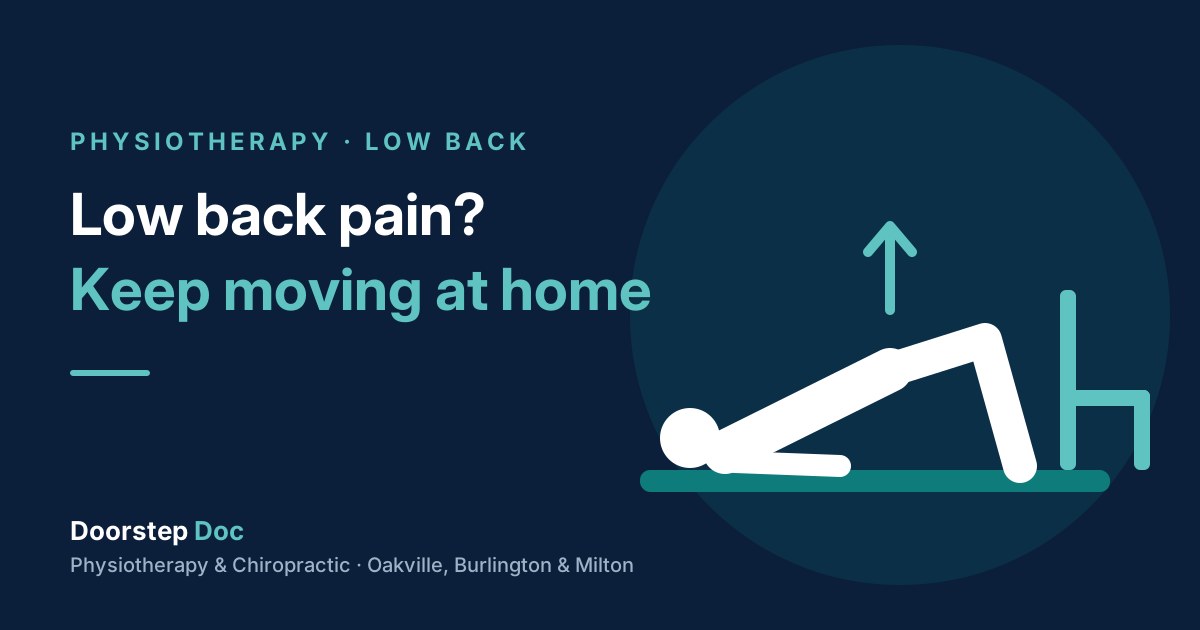
"Should I rest it, or should I be doing exercises?" That's usually the first thing people around Oakville ask me about a sore back, often while standing very carefully next to the kitchen counter. It's a fair question, and the answer has changed a lot over the years.
Physiotherapy for low back pain today is built around keeping you moving. Bed rest used to be the standard advice. Now guidelines from the UK, the US and elsewhere point the other way: stay as active as you reasonably can, and use exercise and hands-on treatment to help you get there. This post covers what that looks like when I come to your home, a few exercises I often start with, and some honest talk about lifting.
What physiotherapy for low back pain involves
A physio visit for a sore back has four parts, and there's more hands-on work in it than most people expect. They overlap, but it helps to know what each one is for.
1. Assessment
I start with your story: when it began, what makes it worse, what eases it, and what it's stopping you from doing. Then I watch you move. How you bend, how you get up from a chair, how you roll over and get out of bed. I also check strength, reflexes and sensation in your legs, and ask the screening questions that tell me whether you need a doctor first. Most back pain turns out to be mechanical, meaning it comes from the muscles, joints and other tissues of the back rather than anything sinister, but that's something to check, not assume.
2. Hands-on treatment
A lot of people are surprised by how much of a physio visit with me is hands-on. Joint mobilization, soft tissue work and assisted stretching are a big part of how I treat a sore back, and many people find they ease pain and stiffness enough to make moving feel possible again. The guidelines put manual therapy alongside exercise rather than on its own, and that's how I use it: hands-on work to get things moving, then exercise to keep them moving.
3. Exercise
Exercise is at the centre of the current UK guideline (NICE) for low back pain, and the American College of Physicians lists it among first-line treatments for back pain that has lasted longer than about three months. There isn't one magic exercise. The right ones are the ones that suit your back, your fitness and your day, and that you'll actually do. Usually that's a short list, not a 40-minute routine.
4. Education
Understanding what's going on takes a lot of the fear out of back pain. Hurt doesn't always mean harm, and most new episodes improve over time. I'll explain what I found in plain language, what's likely helping and hurting, and what to expect over the next few weeks.
Why moving usually beats resting
A sore back makes the couch look very appealing. The trouble is that long stretches of bed rest tend to leave people stiffer and slower to get back to normal, and research reviews have found that advice to stay active does better than advice to rest in bed. Staying active doesn't mean pushing through sharp pain. It means doing as much of your normal day as you comfortably can, and building up from there.
Some practical ways to do that:
- Short walks, often. Five or ten minutes around the block in Glen Abbey counts. A full loop of the Bronte waterfront can wait until next week.
- Change position regularly. If sitting flares it up, get up every 20 to 30 minutes, even just to refill your water.
- Keep doing light chores. Unloading the dishwasher in a few small batches is better than avoiding the kitchen entirely (though nobody will blame you for trying).
- Use heat if it feels good, for 15 to 20 minutes with a layer between it and your skin.
Exercises for low back pain I often start with at home
When someone's back is fairly irritable, I start gently and build up. A typical progression looks something like this:
- Easy movement first: walking, pelvic tilts and knee-to-chest stretches lying on your back.
- Gentle mobility: cat and camel on hands and knees, moving slowly through a comfortable range.
- Strength once that feels fine: glute bridges and bird dogs, then adding sets or holding a little longer.
- Back to real life: practising the tasks that matter to you, like getting in and out of the car, picking things up from the floor, or the stairs to the laundry room.
You'll find step-by-step instructions for each of these on our low back pain exercises page. A bit of mild soreness that settles within a day is normal. Pain that's sharp, spreads down your leg or keeps building is your cue to stop and get it checked.
One of the perks of seeing a physio at home is that I can fit your exercises to what you actually have. Your kitchen chair, your hallway, your stairs. No fancy equipment that ends up as a coat rack.
Lifting at home without the fear
"Bend your knees, keep your back straight" is probably the most repeated piece of back advice there is. The research is less certain than the poster in the break room suggests. A 2019 review in the Journal of Orthopaedic & Sports Physical Therapy didn't find that lifting with a rounded back was a risk factor for low back pain, though the studies it looked at weren't of high quality. In other words, a bit of bend in your back while you lift isn't the disaster it's made out to be.
So instead of one perfect technique, I focus on a few sensible habits:
- Keep the load close to your body.
- Face what you're lifting instead of twisting while you hold it.
- Split heavy loads. Two trips from the car with the Costco haul is fine. Your back doesn't give out medals for one trip.
- Build up gradually, especially before a big job like raking leaves or moving furniture.
- Practise lifting the things you lift every day, so your back gets used to them.
Go to the emergency department right away if back pain comes with numbness or tingling between your legs or around your bottom (the "saddle" area), new trouble starting to pee, not being able to empty your bladder, loss of bladder or bowel control, sciatica in both legs, or leg weakness that's getting worse. These can be signs of cauda equina syndrome, which needs urgent treatment. Also go to the ER for back pain after a significant fall, car accident or other injury.
See your doctor promptly if you have back pain with a fever or feeling unwell, unexplained weight loss, a history of cancer, pain at night that doesn't ease with rest or changing position, back pain after a minor fall if you have osteoporosis or take long-term steroids, or pain that keeps getting worse.
Physio, chiro or both: back pain care at home in Oakville
Doorstep Doc is a family-run practice. I'm the physiotherapist, and Dr. Alex Greyvenstein is the chiropractor. We both assess and treat back pain, both use hands-on care and exercise, and both come to your home in Oakville, Burlington and Milton.
The main difference is that chiropractic adjustments are Dr. Alex's department. My treatment doesn't include adjustments. Some people prefer one approach, some do well with both, and because we work together, we can keep your care coordinated. You can read more about how we treat it on our low back pain treatment page, or about in-home physiotherapy in Oakville.
If you're not sure where to start, the free 15-minute phone call is a chance to ask your questions and work out whether physio, chiro or both makes sense for your back. When you're ready, you can book a home visit. Comfy clothes and a bit of clear floor are all you need.
Common questions
How many physiotherapy sessions will I need for low back pain?
There's no set number. It depends on how long you've had the pain, how irritable it is and what you want to get back to. A recent strain often settles faster than back pain that has been coming and going for months. After your assessment I'll give you a realistic idea, and the plan changes as you improve. Your home exercises do a lot of the work between visits.
Should I see a physiotherapist or a chiropractor for low back pain?
Either is a reasonable choice. Both assess and treat back pain with hands-on care and exercise. Chiropractic adjustments are done by Dr. Alex; physiotherapy with Helena doesn't include adjustments. Some people see one, some see both. The free 15-minute phone call is a good place to ask which fits.
Does OHIP cover physiotherapy for back pain?
For most adults, no. OHIP funds physiotherapy at government-funded clinics for people who are 65 or older, 19 or under, had an overnight hospital stay or day surgery in the last 12 months for a condition that needs physio, or receive Ontario Works or ODSP. For publicly funded physio at home, Ontario Health atHome decides who qualifies. Many extended health plans include physiotherapy, so check your plan's details.
Do I need an X-ray or MRI before physio for back pain?
Usually not. Guidelines don't recommend routine imaging for most low back pain, because it rarely changes treatment. It may be needed after significant trauma, with worsening nerve symptoms, or when something more serious is suspected. If your assessment points that way, you'll be referred to your doctor.
Do I need a doctor's referral to see a physiotherapist in Ontario?
No. You can book directly with a physiotherapist in Ontario. Some extended health plans ask for a doctor's note before they reimburse physiotherapy, so it's worth checking your plan first.